


 Back
Back
Role of an adult in early childhood years
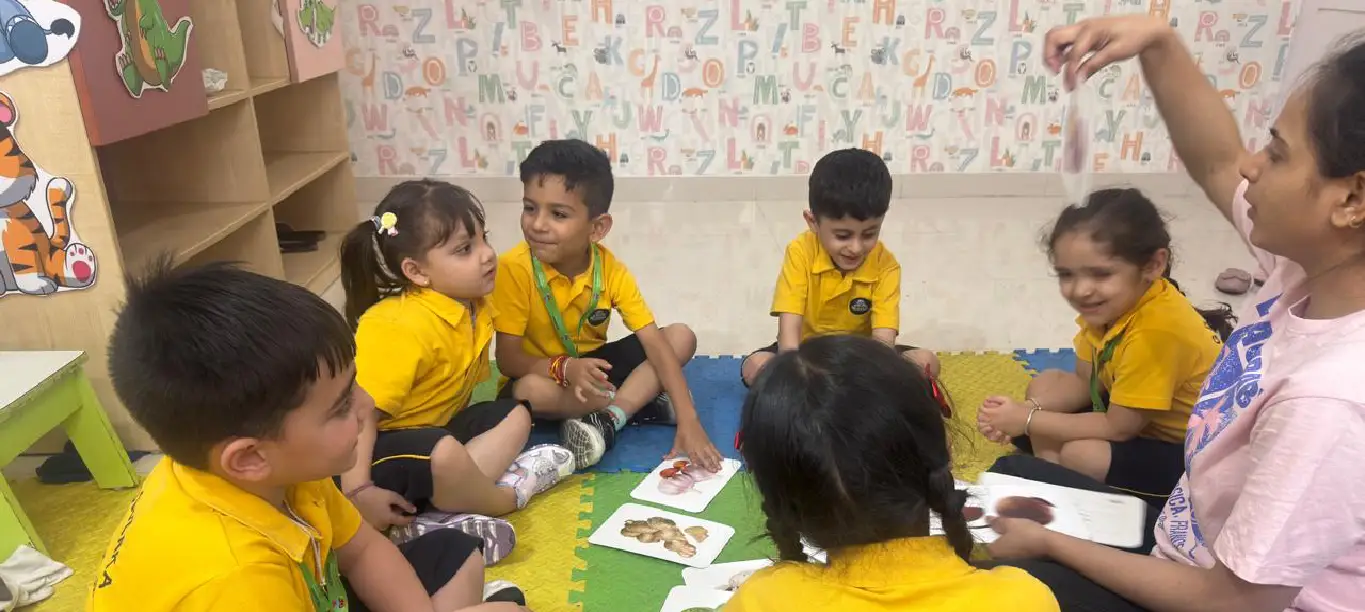


The early years of childhood play an important role in every stage of development, and learning during this phase should be a journey of discovery, imagination, and emotional growth. During this stage, adults play a meaningful role in shaping how children learn, communicate, and understand the world around them.
Parents’ support and teachers’ guidance can make simple everyday life easy through conversations where children share everything about their day, and they feel nurtured, supported, and valued. These interactions can leave a lasting impact on a child’s sense of safety, confidence, and emotional well-being.
Why personal connection makes a difference
The early childhood years lay the foundation for a child’s future learning, behaviour, and emotional well-being. During this stage, children grow rapidly and absorb experiences from everything around them. A positive and nurturing environment helps them build confidence, communication skills, and curiosity from an early age. The following are some facts that help us understand why personal connection is important:-
- The 90% rule: India’s NCF highlights that 90% of brain development occurs by the age of 8. The government’s NIPUN Bharat mission targets foundational literacy and numeracy (FLN) for 100% of children by Grade 3.
- The language factor: A personal touch from a teacher or parent using the child’s mother tongue (home language) is proven to improve cognitive grasp by 30–50% compared to English-only instruction.
- The anganwadi system: India has over 1.3 million anganwadi centres. Anganwadi workers provide a personal touch to 80 million children by focusing on nutrition and stimulation, which are primary drivers of rural social stability.
- Individualised attention (PTR): The Right to Education (RTE) Act mandates a pupil-teacher ratio of 30:1. However, high-performing schools that maintain a “personal touch” by keeping ratios closer to 15:1 see a 25% increase in student engagement.
- Holistic Progress Cards (HPC): Moving beyond marks, the new Indian “360-degree” report cards include self-assessment and peer assessment, requiring teachers to understand the child’s personality, not just their test scores.
- The "Grandparent Effect": In homes where grandparents are involved, children often show higher resilience. The "personal touch" of storytelling (Dadi-Nani stories) is now recognised by the NEP 2020 as a valid pedagogical tool.
- Digital Balance: Parents who provide co-viewing digital content see a 15% higher retention of educational concepts in their children.
- Academic Pressure: Indian parents are increasingly using "Positive Parenting" workshops to move away from "Tiger Parenting." Data shows children in low-stress, high-warmth Indian homes perform 12% better in STEM subjects.
The role of parents and teachers
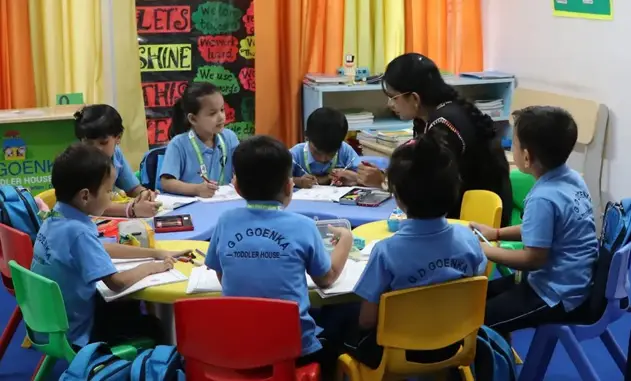
Parents and teachers together play an important role in shaping a child’s early experiences and development. While parents provide love, comfort, and emotional security at home, teachers create a supportive learning environment where children explore, communicate, and grow with confidence. When both work together, children feel more secure, encouraged, and motivated to learn.
For Teachers:
Circle Time: Start every day with 10 minutes of "Baat-Cheet" (Conversation) in the local language to build trust. Local Resources: Use "Kabaad se Jugaad" (Best out of waste) to create personal learning kits for each child.
For Parents:
Mealtime Talk: Instead of asking "What did you learn?" ask "What made you laugh today?" This targets Social-Emotional Learning (SEL).
Shared Reading: Read in your native language to strengthen the child's neural pathways for complex language acquisition.
Conclusion:
During the early stage, learning, growth and discovery interaction play an important and meaningful role in shaping the child’s future. The environment, encouragement and care provided by parents and teachers help children to develop confidence, emotional security and love for learning.
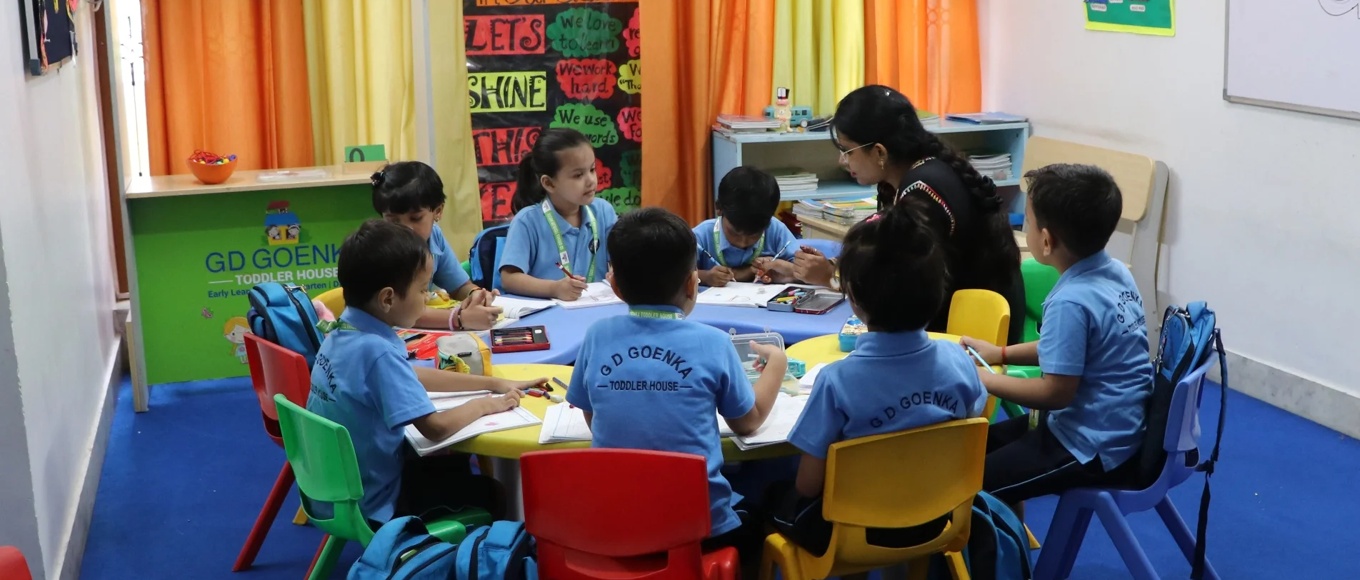
There are schools like GD Goenka Toddler House who offer a nurturing and positive environment, where students can feel safe, valued, and inspired to explore the world around them. After all, the support and connection children receive in their early years often become the foundation for their lifelong growth and happiness.
Ms. Anshu Gupta
Principal
GD Goenka Toddler House Vikas Nagar, Jammu





 +91 9312345678
 joinhands@gdgoenka.com