


BLOG
 Back
How Jolly Phonics Helps Young Children Build Early Reading and Sound Awareness
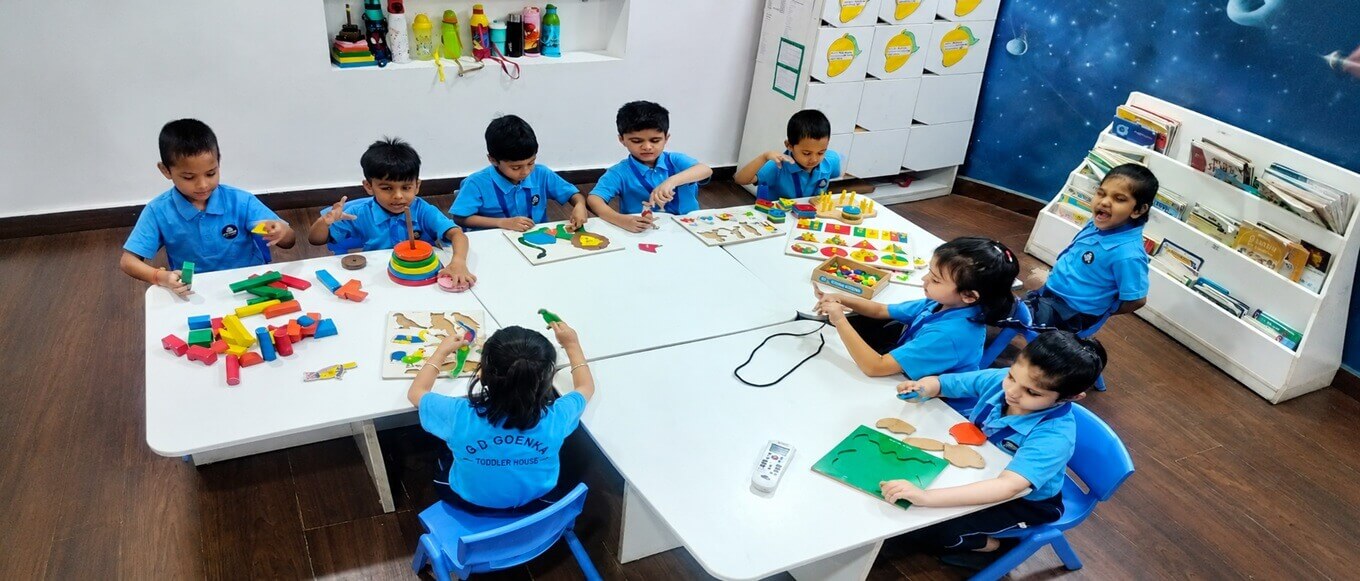


Learning to read is an exciting milestone in early childhood. It is a wonderful moment in every classroom when a child suddenly realises, “I can read!” A few simple sounds come together to form a familiar word, and the child's face lights up with surprise and pride.
Jolly Phonics makes this journey enjoyable and meaningful through songs, actions, stories, games, and interactive learning. Beyond recognising individual letter sounds, children begin to understand how sounds work together to form words, laying the foundation for early reading, spelling, and communication.
Developing Phonological and Phonemic Awareness
Before children can read words confidently, they need opportunities to listen carefully and recognise the sounds in spoken language. Phonological awareness helps children notice and work with sound patterns, while phonemic awareness focuses specifically on identifying and working with individual sounds in words.
Jolly Phonics supports this development by helping children connect letter sounds with their corresponding letters. Through structured, playful practice, children gradually learn to recognise sounds, distinguish between them, and understand how they contribute to word formation.
Research reviewed by the National Reading Panel found that systematic phonics instruction supports children's ability to decode words and develop early reading and spelling skills. These findings highlight the importance of introducing sound awareness and letter–sound relationships through clear, age-appropriate instruction.
Learning Through Songs, Actions, and Movement
Jolly Phonics brings a lively and interactive dimension to the classroom. Through songs, actions, games, dancing, and storytelling, children engage with letter sounds in ways that encourage active participation and repeated practice.
For teachers, this creates opportunities to make phonics a joyful part of everyday learning rather than relying only on worksheets and repetition. Songs and actions give children memorable ways to revisit sounds, while games and stories help them practise listening and speaking in different contexts.
The Jolly Phonics programme uses a multisensory approach that combines visual, auditory, and physical experiences to introduce letter sounds and reinforce learning.
Building Words Through Blending and Segmenting
One of the most important steps in early reading is learning to blend individual sounds to read a word. Children begin by recognising letter sounds and gradually learn to combine them to read simple words.
For example, when children learn the sounds /c/, /a/, and /t/, they can blend them to read cat. Similarly, segmenting involves breaking a word into its individual sounds, which supports early spelling.
These skills are particularly important when children begin reading CVC (consonant–vowel–consonant) words, such as cat, pin, and sun. With regular practice and teacher guidance, children become more confident in applying their sound knowledge to unfamiliar words.
Encouraging Confidence and Independent Learning
As children become familiar with letter sounds and simple words, they begin to approach reading with greater confidence. Multisensory activities provide opportunities for children to listen, observe, speak, move, and practise at their own pace.
Teachers can support this progress by introducing sounds systematically, providing opportunities to blend and segment words, and offering encouragement throughout the learning process. Reading practice, along with opportunities to listen to stories and explore books, helps children connect their developing decoding skills with meaningful language experiences.
Phonics is an important part of early literacy, and it works best alongside activities that build vocabulary, listening skills, comprehension, and a love of books.
The Joy of Watching Children Learn to Read
As a nursery teacher, I experience immense satisfaction and joy when I see children in my class build CVC words and begin reading independently using phonics. Conducting Jolly Phonics sessions during classroom learning or circle time allows me to witness their progress closely.
The moment a child blends sounds successfully and reads a word for the first time is truly rewarding. What begins with recognising a few letter sounds gradually develops into the confidence to attempt new words. Each small achievement reminds me how meaningful these early learning experiences can be.
Conclusion
Early reading develops through consistent practice, encouragement, and meaningful learning experiences. By combining letter sounds with songs, actions, blending, segmenting, and interactive activities, Jolly Phonics helps make the process engaging for young learners.
At GD Goenka Toddler House, these early experiences can help children build a strong foundation for reading while discovering the joy of learning, one sound and one word at a time.
Ms. Aranta
Nursery
GDGTH Gomti Nagar







 +91 9312345678
 joinhands@gdgoenka.com