


BLOG
 Back
Back
The Science Behind Play-Based Learning: Why Children Learn Better Through Play
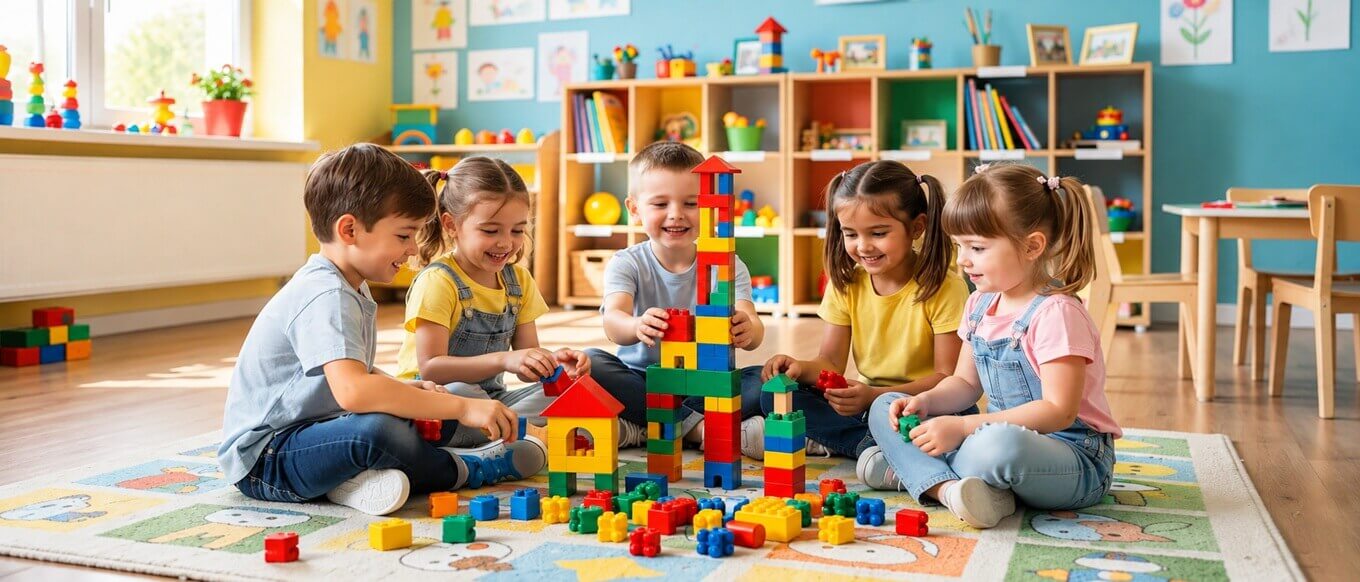


The early years are a time of significant growth, as children develop new skills and gradually learn to think and act more independently. They are constantly observing, asking questions, testing ideas, and making sense of the world around them. Much of this learning happens naturally through play. When children build, pretend, move, experiment, or play with others, they are not simply having fun. They are developing ways of thinking, communicating, solving problems, managing emotions, and understanding their surroundings.
This is why play has an important place in early childhood education. Rather than separating learning from play, play-based learning uses children’s natural curiosity as a starting point for meaningful experiences. The science of early childhood development helps explain why this approach can be so effective.
From Froebel to Multiple Intelligences
The idea of learning through play is not new. Friedrich Froebel, the German educator regarded as the father of the kindergarten, recognised play as central to early childhood learning. He believed children learn best when they have opportunities to explore, create and make sense of their experiences.
This thinking continues to shape early years’ education today. At GD Goenka Toddler House, Froebel-inspired learning is integrated with Howard Gardner’s Multiple Intelligences Theory, recognising that children learn and express themselves in different ways. Play allows children to engage with language, movement, music, creativity, logical thinking, and social interaction in meaningful ways.
What Happens When Children Play?
The science behind play can be seen in everyday preschool experiences:
- Neural connections: The early years are a time of rapid brain development. Every new experience helps children form and strengthen brain connections. When children build, sort, explore, and experiment through play, they are processing new information and making connections. For example, when a child builds a tower with blocks, knocks it down and tries again, they learn about balance, size, shape, and cause and effect.
- Executive function: Play also exercises the brain’s ability to focus, remember, control impulses and adapt. A game such as Simon Says asks children to listen carefully, remember instructions and control their responses. Puzzles and pretend play similarly encourage working memory, flexible thinking and problem-solving.
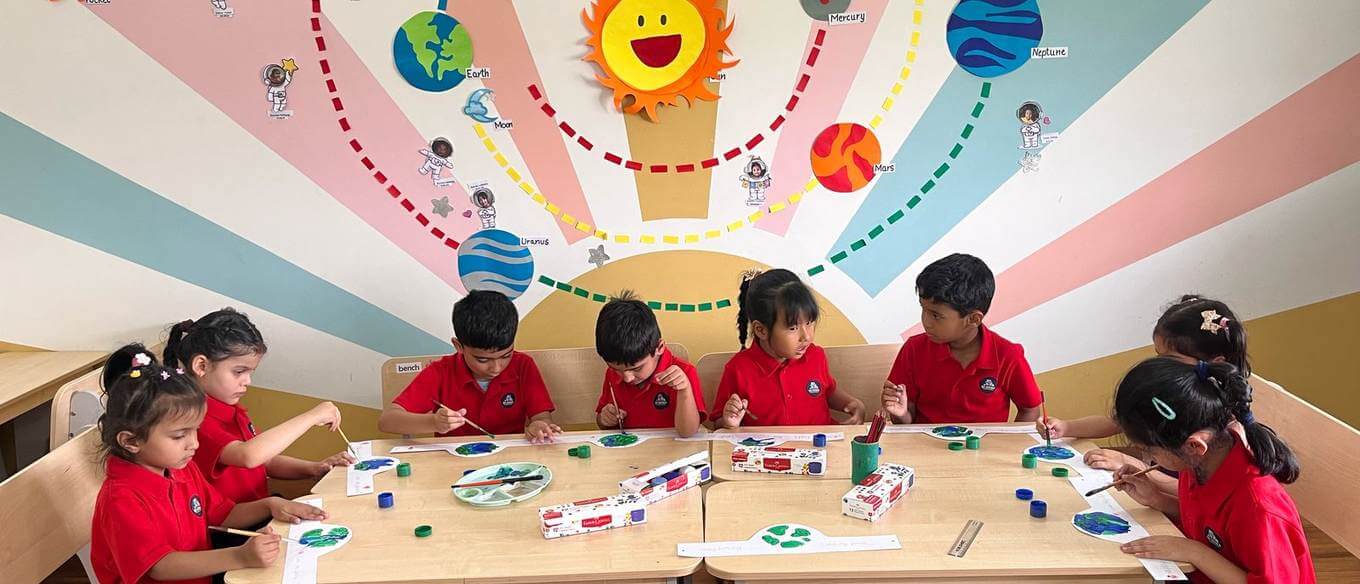
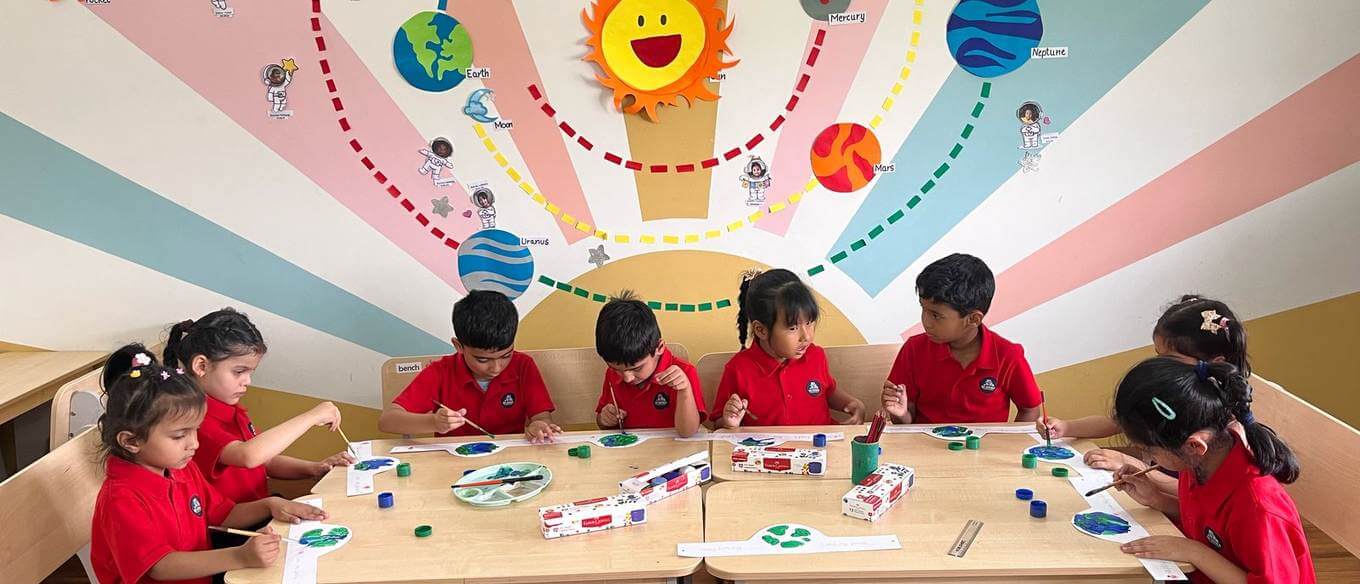
- Active learning: Children understand concepts more deeply when they discover them through experience. When they mix colours, pour water between containers or sort objects by size, they make predictions, observe what happens and try again. They are learning through doing, rather than simply being told.
- Emotional safety: Play gives children a comfortable space to express themselves and try out new ideas. When a child becomes a doctor, teacher, or shopkeeper during pretend play, they can explore different roles, practise communication and empathy, make mistakes, and try again. This builds confidence and motivation to participate in learning.
How Preschool Can Help in Play-Based Learning
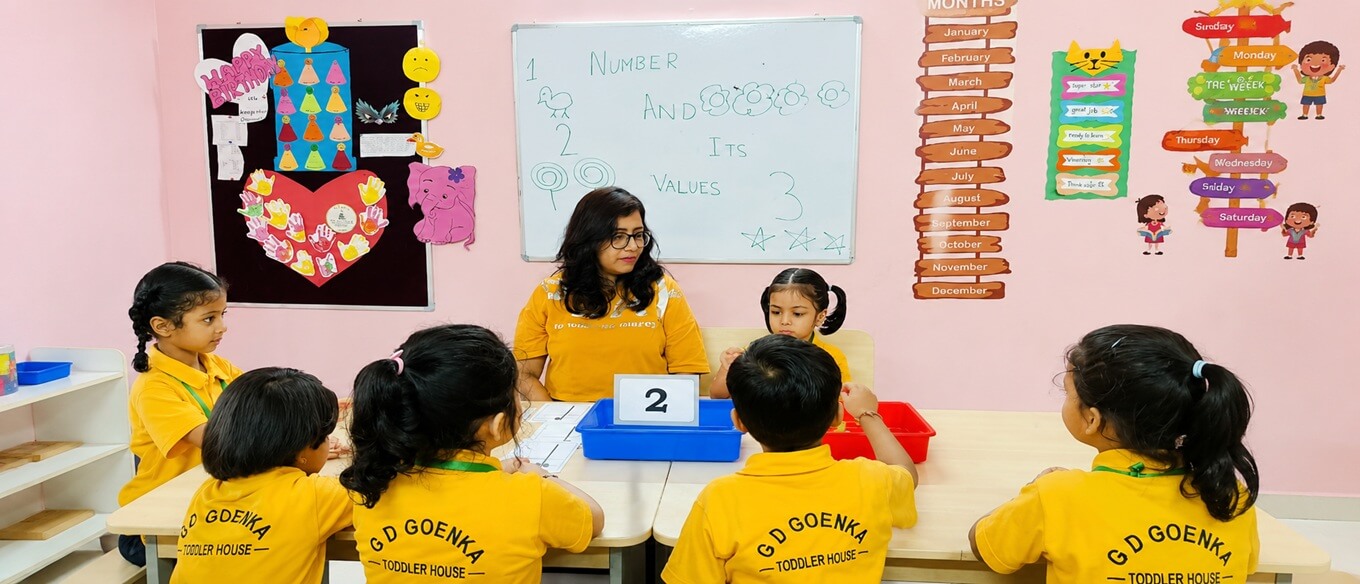
A preschool plays an important role in creating an environment where play becomes a meaningful part of learning. It is not simply about giving children time to play, but about creating experiences that encourage curiosity, exploration, interaction, and problem-solving. The way activities are planned, educators engage with children, and the learning environment is designed can all influence how children learn through play.
- Creating Purposeful Play Experiences – Preschools can design play experiences that allow children to explore while developing language, problem-solving, motor, social, and emotional skills.
- Balancing Free and Guided Play – Children need opportunities to explore independently, while educators can introduce activities, ask questions, and extend their thinking. A thoughtful preschool environment allows both forms of play to work together.
- Encouraging Different Ways of Learning – Children engage with the world in different ways. Preschools can offer experiences involving movement, music, stories, art, sensory exploration, building, problem-solving, and interaction with others.
- Providing Supportive Educators – Educators can observe children's interests, understand their individual needs, and use these observations to guide or extend their play. Their role is not to direct every activity, but to know when to step in and encourage deeper exploration.
- Creating a Safe Space to Explore – Children learn more freely when they feel comfortable asking questions, making mistakes, trying again, and expressing themselves. A nurturing environment gives them the confidence to explore without fear of getting things wrong.
- Connecting Play with Everyday Learning – Play can extend beyond a particular activity. Children can connect what they experience while playing with language, relationships, everyday situations, and the world around them, helping them understand that learning happens in many different ways.
Play Takes Many Forms
Preschool play can be free or guided, sensory or physical, imaginative or social. Children may explore sand and water, build with blocks, take on roles in pretend play, or navigate an obstacle path. As they grow, they move from playing alongside others to playing and creating together.
At GD Goenka Toddler House, educators observe, facilitate, and extend these experiences with purpose. This makes play an important part of the curriculum, not simply a break from learning.
- Manager – Learning & Development
- Pre School - GD Goenka Alliance




 +91 9312345678
 joinhands@gdgoenka.com